PRESS & MEDIA / MUSICAL LIFE
Oleg Chechik: A Sound Engineer Sometimes Needs to Demonstrate the Skills of a Psychologist
A conversation about recording symphony orchestras in small studios, musicianship, and the sound engineer’s creative and technical responsibilities.

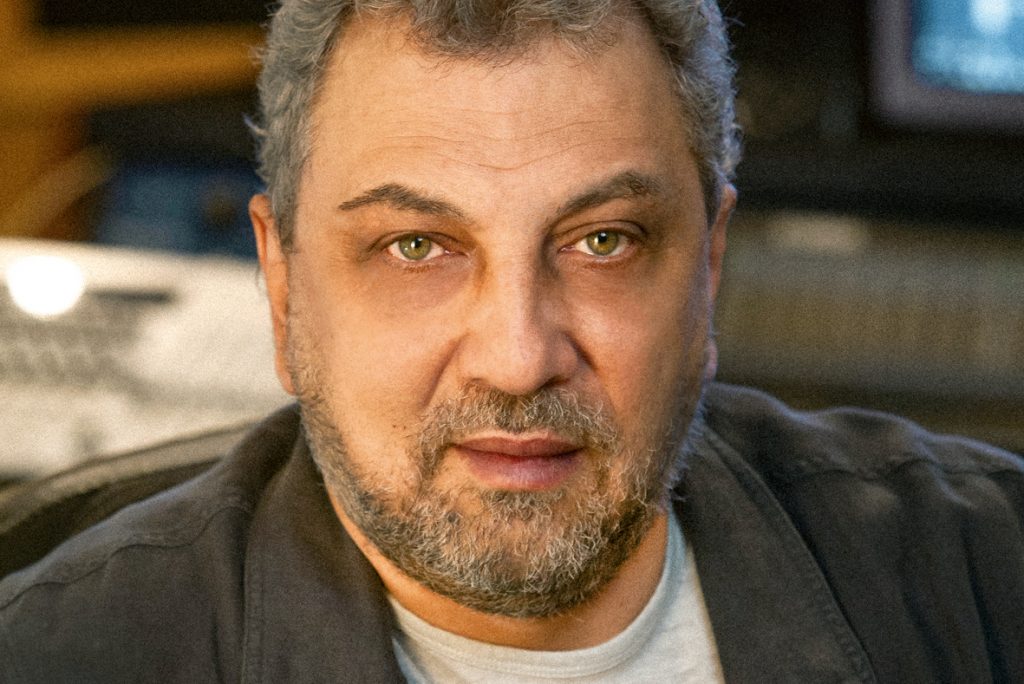
Founder of Studio CSP, Oleg Chechik (OC), is a recognized expert in the field of sound recording and mastering. As a sound engineer, he used to work with dozens of Russian and international musicians, including Tamara Gverdtsiteli, t.A.T.u., Turetsky Choir Art Group, and Nilda Fernandez.
Oleg Chechik also developed a unique technique for recording of a symphony orchestra in a small studio setting, which he discussed in detail in the interview with Elena Romashova (ER).
What is the fundamental difference between recording classical music and, for example, pop or rock compositions?
When recording certain music, such as soundtrack, not only arrangers but also orchestrators are involved. We engage people to write the score, as musicians should not be explained in layman’s terms what they need to play; everything must be reflected in the note sheets. So, it is a significant collaborative effort. When many musicians are being recorded, the sound engineer has to explain each of them what and how exactly they need to play, and this is not always easy. One is in a bad mood, something has happened to another one, and so on. And in each case, the sound engineer also has to be a psychologist finding the right words and explaining to the musician what needs to be done.
What is the common practice in recording of an orchestra nowadays?
The standard scheme of working with a symphony orchestra is as follows: we put a full orchestra of 80 to 100 people in a large hall before an impressive set of microphones complying with certain acoustic conditions (it can be both a stage and a studio) and make recordings. However, today it is extremely difficult to maintain a large studio where an orchestra can be fully accommodated, and it’s not only about the financial aspect. In addition to the problem of maintaining large studios, there is also a problem with the orchestras themselves. The fact is that only a few ensembles can perform not just the compositions they have learned while studying at the music university but also the material composed for a musical or a movie soundtrack. These works often turn out to be difficult to play cleanly and accurately. So, it will take us a long time to rehearse every single piece for the orchestra to play the way we need. And we may have thirty of these pieces on our list. In this case, we have to pay for about a month of work of engineers and musicians as well as to bear a large studio rental costs. That is a lot of money, and such process makes the whole work literally "golden."
While in cinema production these things are budgeted for, neither theaters nor performers can usually cover such expenses. Moreover, we repeatedly faced the fact that when working with large orchestras, the material recorded over several days had to be deleted, we simply could not keep anything from those sessions.
That's when we realized we needed to come up with some kind of recording cycle that can replicate the sound of a symphony orchestra but in a small studio, without using large studio space and without involving all members of a symphony orchestra simultaneously. And this method has been eventually found.
What is special about your method for recording a symphony orchestra?
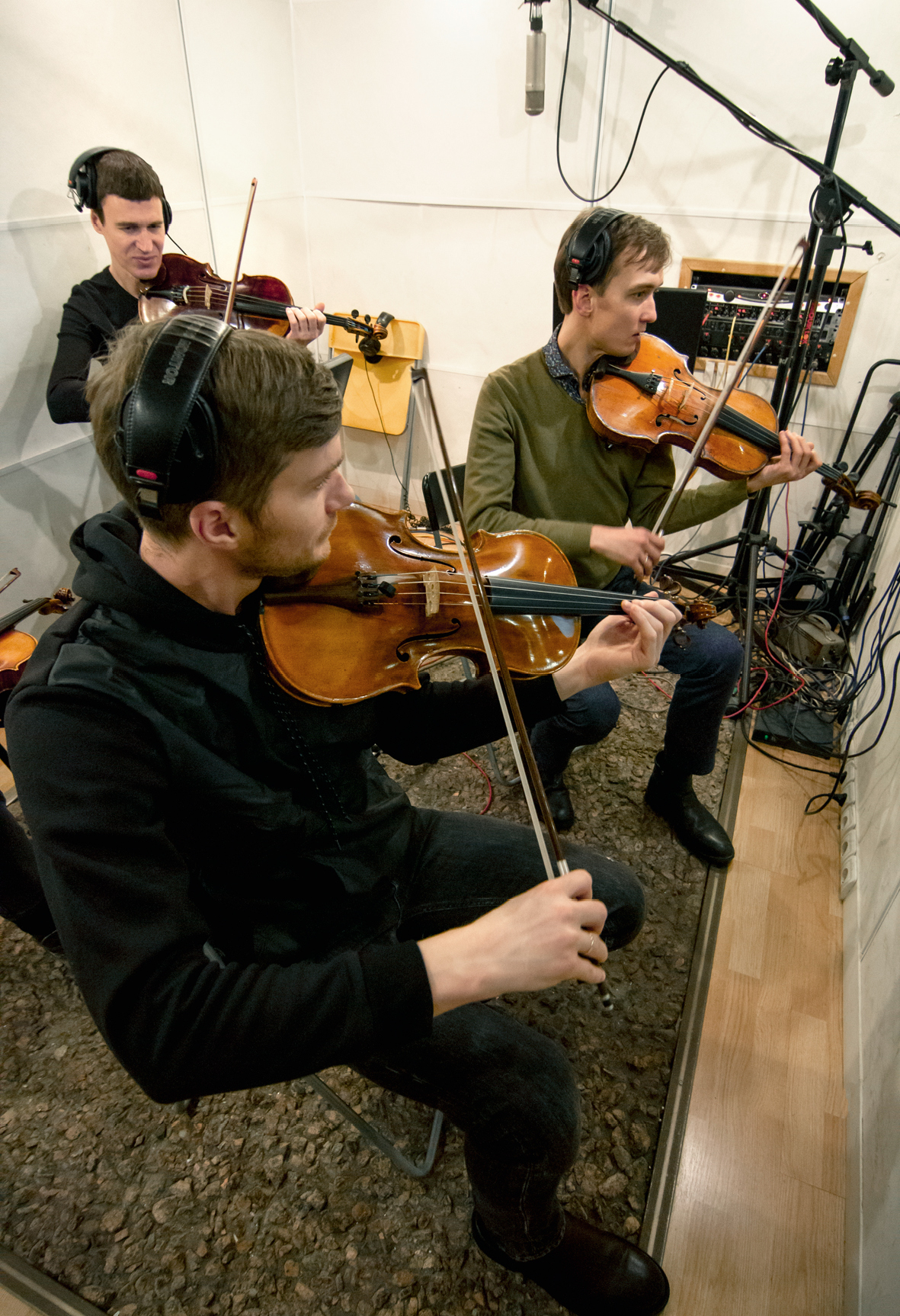
This method consists of three main components. The first is to find musicians who can play everything we need. This is one of the main criteria, and it is also the most difficult one to comply with. The second is to reproduce the sound of a big orchestra and all instruments in a small studio. The violin group in a large symphony orchestra is the most massive, so we start recording them playing in small groups consisting of six to eight people. They record both the first and second violins parts. After that, the viola, cello, double bass, woodwind, and all other instrument parts are recorded. We record the first take, "clean it up," and see where it needs to be played and what nuances have to be added. This take serves as the main one. Having recorded the first take, we need to lay the following takes over it. Here we face another difficulty. Since the studio space is small and has so-called "dry" sound, meaning there are no acoustic reflections, it creates certain challenges as it is producing sound lacking depth. Moreover, if we simply overlay takes on top of each other, the resonant frequencies of recording space will be multiplied each time.
There are several ways to avoid this. One of them is to change the microphones positions each time a new take is recorded. But from practical point of view, doing this is quite difficult. That's why, we use a unique microphone with four capsules connected to a processor. Its perceived position can be changed, both in height and distance, without actual re-location.
The next step in this technology was not invented by me - it was used by ABBA. Both lead vocalists recorded all the backing vocals themselves, but during the process when many vocal parts needed to be created, they realized that by simply overlaying the same vocal parts on top of each other, they wouldn't get the desired result. So, they did the following: they recorded the first vocal parts at the normal speed, then reduced the speed with a small turn of the knob (back then, tape recorders were analog), recorded the vocal parts again, then increased the speed and recorded them once more, repeating this process many times. When they played the recording at the original speed, it turned out that the formants of the vocals slightly changed, making the voices sound different. The same thing happens when working with an orchestra: I change the sampling rate during recording, increasing and decreasing it by literally 0.2 percent, and the same thing happens to the formants. Following this procedure, we can record four to five takes, on average. If we record four overlaid takes played by 6 violinists, we get the equivalent of recording of 24 first violins performance. It works the same way with all other instruments.
Has your method already been put into practice?
Of course. This was the way the soundtracks for the films “The Sovereign's Servant” (rus. – Sluga Gosudarev), “The White Gold” (rus. – Beloe Zoloto), and the TV series “Another Life” (rus. – Drugaya Zhizn) as well as two musicals - “Count Orlov” (rus. – Graf Orlov) and “Anna Karenina” were recorded.
How much time did it take you to improve your method?
Most of the time was spent on searching for the right musicians. Having gathered a certain ensemble, I began to experiment and developed the method I mentioned earlier. It's important to understand that this technology is not only about the ability to record a symphony orchestra in a small studio space but also about the high level of performance accuracy which is required from the musicians. When a few musicians play, all the inaccuracies are very clearly heard.
Why does this happen?
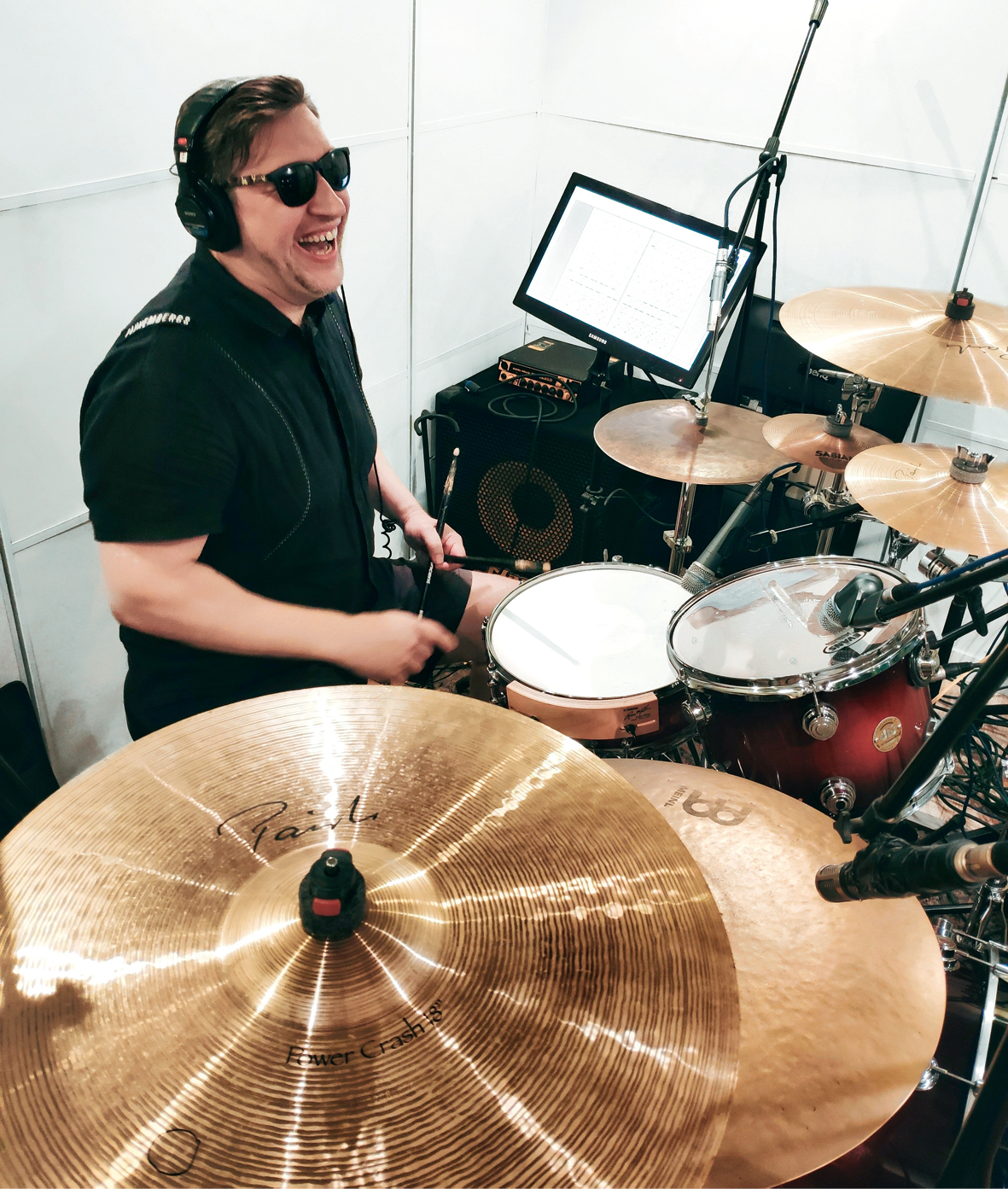
At first, musicians are not used to such sound, and they don't always play as we would like them to play. When a large orchestra consisting of 80-100 participants is playing, an imprecise performance of a certain musician may just be unnoticed. It should be noted that, for example, a guitarist performs solo, so it's easier for me to control the recording process. However, it gets more difficult when it comes to recording a group of classical musicians since more people are involved. For many years, we were painstakingly building a team of professionals who would be able to record symphony orchestra parts in accordance with our requirements without limiting us by the team members’ capabilities.
So, among a vast number of musicians, it is extremely difficult to find those who can play well together?
We lack good orchestra musicians. And it is about the system.
There are few ensembles that can instantly play material written, for example, for a soundtrack or a musical.
Abroad, education process is arranged as follows: a child enters a music school and learns to play in an orchestra from the very first year. That means the child initially plays in a group where cohesion is essential, they need to hear their "neighbor". This is an important skill for any musician, not just classical musician. And only after a student shows an aptitude for solo performance, they are separated from the group and further educated as solo artists. In our country, it is vice versa, and solo artists are initially trained. As a result, a large number of solo musicians in the orchestras cannot play together since they cannot hear the performers sitting next to them. Currently, the situation has started to improve slightly. The musicians who can play in large ensembles finally appear, but still there are not enough of them. For example, the performance of the Russian National Youth Symphony Orchestra, where all the participants are strictly under 30 years old, was a great discovery for me. I was surprised by the great cohesion of the orchestra and their understanding of the music they perform.
For example, there is the Symphony No. 8 by Mahler. Up to 450 people can participate in the performance: three choirs, a huge orchestra, solo artists. Can such a work be recorded in a studio?
Of course, it's difficult, but it's possible. Working with such a piece as Mahler's Symphony No. 8 is much more challenging, but we had a similar experience. For example, for the musical Count Orlov (Graf Orlov), we recorded the choir of the Bolshoi Theater, overlaying several takes on top of each other, which allowed us to get the sound of a choir consisting of 80 to 100 people.
Concert recordings usually have many extraneous noises. Is it challenging to work with such material, and can it be "cleaned up" in the studio?
It is extremely difficult to clean up nuances like sneezing or coughing or a phone ringing in the concert hall. And these things happening to the audience is less of a problem. If something happens to a musician on stage (something falls, the bow touches the instrument), it's already impossible to remove. This is because, in addition to the local microphones for the groups of musicians, there is an ambient microphone that determines the primary sound.
So, would such recording be considered ruined?
I would put it this way: some live recordings are valued, among other things, since they sound natural, and that gives the sense of presence. If it's an important recording, it has to be redone because of these flaws. But if it's just an ordinary concert recording, they usually leave it as is. As it is quite difficult to completely eliminate extraneous noises.
English translation of the article originally published in Musical Life, Issue 2 (1231), February 2022. Interview by Elena Romashova. Transcribed from the English-language magazine pages 79–81. Photograph credit in the original: Karina Gorbachevskaya.