Fashion in Sound.
Oleg Chechik — about sound engineering
And what has changed in it over the last 20 years
 Published in ArtMoskovia
Oleg Chechik is a well-known Russian sound engineer, a voting member of the Grammy.
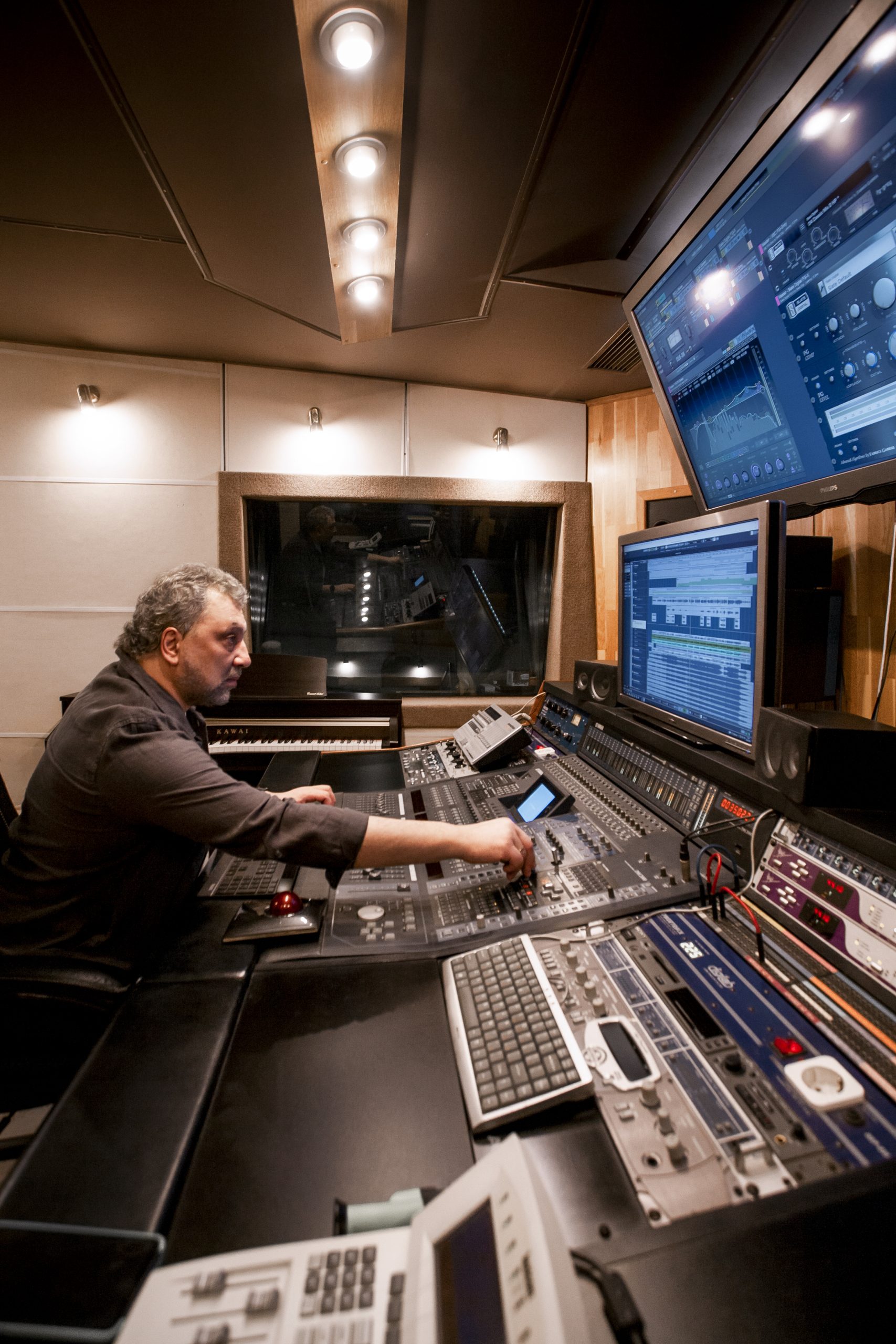
Who is a sound engineer?
In short, a sound engineer is a specialist who makes recording, processes and mixes sound. They are engaged in various fields such as film production, television, music, radio, theater, and other areas where excellent sound is required. Overall, sound engineers play an essential role in creating high-quality sound material which is able to improve emotional connection of the viewer or listener with the work and enhance their perception of same.
What do sound engineers do, and what are their tasks?
A sound engineer is responsible for recording sound on filming location, at a concert, or in a studio. They control volume levels, equalization, spatial processing, and other parameters to achieve the best sound. They choose microphones and equipment for the most accurate sound transmission. They process sound files, take care of sound mixing, and mastering.
What is a role of a sound engineer in creating a music track or song?
Sound engineers play a vital role in creating high-quality sound material that can enhance the perception and emotional connection of the viewer or listener with / to the work. It is not about merely sitting behind the console and pressing buttons. It’s a substantial collaborative effort of the sound engineer and a composer, performer, director, producer, as well as musicians and other team members to achieve the project's major goal.
Does the sound engineer then become a co-author of the performance?
Not really. A sound engineer is not a co-author of the performance in the strict sense because they do not independently make changes to the music. However, a sound engineer is able to contribute significantly to the sound and overall concept of a music composition, which is essential for creating finest music.
Sound engineers can help the performer to achieve the best sound of their instruments and voice, select optimal sound processing, set tracks in the panorama as well as set volume levels, and many more. They may also provide recommendations for arrangement improvement, changes in style and other aspects of music. Thus, a sound engineer is an essential team member who helps to create an excellent piece of music. However, in some cases, sound engineers can participate in creating music, for example, they could also be composers or lyricists.
What has changed in the work of a sound engineer over the last 20 years?
Over the last 20 years, sound engineering has undergone considerable changes due to the development of technology and changes in music trends. Sound engineers have moved from analog to digital recording, and that has altered the process of recording and mixing music. It has tremendously simplified the editing of vocal and instrumental parts. As the affordable digital technology and software for creating music kept appearing, the number of the music works released worldwide has grown remarkably.
At first, inexperienced musicians who recorded and mixed their tracks "at home" faced significant difficulties in achieving high-quality sound of the recording. Lacking relevant experience, they could not compete with professionals working in specialized studios, and that affected the quality in whole music industry.
As a result, only after a while, lots of musicians realized that solely primary work, such as composing and recording simple instruments, could be done at home. And further work should be done in professional studios with the help of competent sound engineers who are able to control the sound in a specialized room with the proper acoustics. As various music genres developed, sound engineers had to deal with a broader range of sounds and sound design techniques. New mixing methods such as multichannel (immersive) sound have also emerged. Music distribution has become faster and easier to access, causing the need for the creation of mixes suitable for various platforms and formats.
Does a thing like sound fashion exist?
Of course, it does. Over time, trends in sound recording and music production have been changing. These include various recording styles, sound design techniques, use of instruments, and sound processing. Audience's preferences have been changing, too. New genres of music emerge.
For example, in the 1960s, many bands used stereo effects to create spatial sound, and that was a new and fashionable approach in sound recording. In the 1980s, electronic instruments and computer technologies became popular, and they were widely used in music. In hip-hop, the use of super low-frequency bass and compressed, tight sound is popular, while in electronic music, abstract sounds and experimental sound processing techniques are often used. Recently, using of analog technology and vintage sounds has been a growing trend. Technical and cultural context also influences fashion trends in sound recording and music production. Not only does sound fashion exist, but it also keeps constantly changing as time goes by.
What is the secret of a successful sound engineer?
A modern sound engineer should be educated at least in two fields: music and technology, so that professional musicians and a sound engineer can communicate in the same professional language while recording. In case any technical problems arise during recording or live concerts, a sound engineer should be able to resolve them promptly on their own. Continuous learning and studying new technologies, techniques, and instruments used in sound engineering are also essential. It is necessary not only to work with sound but also to effectively communicate with other project participants, be resistant to stress, and in some cases demonstrate psychological skills.