PRESS & MEDIA / SHOWMASTER
Creating the Best Musical
Oleg Chechik on Studio CSP, orchestral and vocal production, and his work on Monte Cristo, Count Orlov and Anna Karenina.

Creating the Best Musical
Oleg Chechik has been a sound engineer and sound producer for more than thirty years. In 2010, having significant experience in the studio and live show sound engineering, he accepted the offer of the Moscow Operetta Theater to work on a musical, soon he got to work on another one, and then on a third. As a result, one of them, Monte Cristo, was considered the best in the world in 2014, and another one, Anna Karenina, was adapted not only into a film version but also into a unique mobile app. Show-Master magazine asked Oleg where and how he works, why musicals require a special approach, and how he contributed to the creation of the musicals.
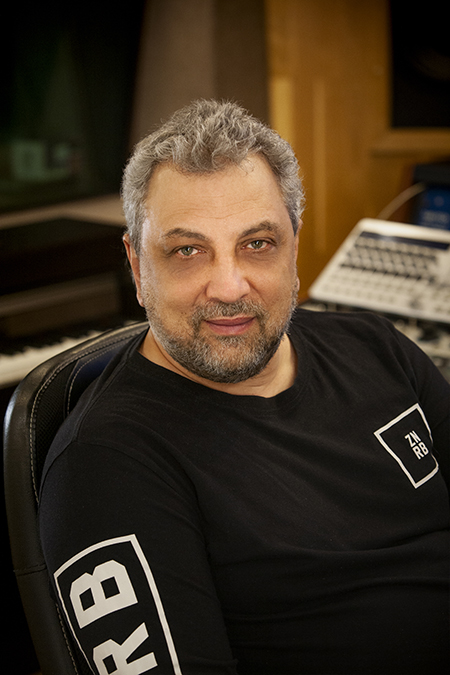
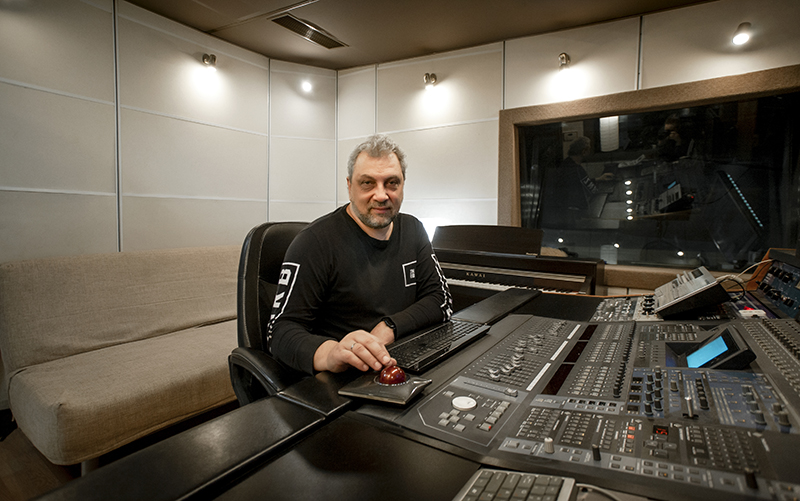
How Studio CSP Is Arranged
The studio was built entirely according to my own design. Its total area is more than 100 square meters. It has three main rooms: the central control room and two studios. The rooms are made in compliance with the "room within a room" principle, completely isolated from external walls, ceiling, and floor. Windows of monolithic glass 21–28 mm thick are installed to separate the control room and the studios, and effectively isolate the rooms blocking any sound. Acoustic traps covered with fabric are mounted in the ceiling. The walls are covered with special sound-absorbing acoustic panels. Far-field monitors Quested HQ210, which operate from the BRYSTON 4B SST amplifier, are mounted in a free-standing wall filled with a large amount of sand to reduce resonant frequencies. In addition, there are near and mid-field monitors by Quested and Focal. In my work, I use an external digital Yamaha DM2000 console (96 channels) with MADI interfaces, which are connected to the RME MADI FX sound card with 192 inputs and outputs. For external processing, I use Lexicon 960L, an amazing device which allows the simultaneous use of four independent effects. Two converters are installed in the recording path: Apogee AD-16X and Solid State Logic XLogic Alpha-Link MADI SX., I use Summit Audio TPA-200B and the eight-channel Millennia HV-3D as tube preamplifiers. Tube compressors Tube-Tech CL 1b and Tube-Tech LCA 2b are also used. For many years, I have been using Cubase as my DAW system. A special feature of the studio is that all the software I use runs on the virtual VMware vSphere system. Five servers are placed in a separate server room to eliminate noise during work. Each of the servers has 64 to 128 GB of RAM, multi-core Xeon processors, and more than 60 TB of disk space based on solid-state drives and hard drives (VSAN). So, I can run several operating systems on any of the servers, and each of them would perform a particular task. For example, on one server, I can use Cubase in one operating system and VST instruments in another, and at the same time work in the mastering system on other servers. Alongside these processes, a backup system operates so the work could be done seamlessly even if two of the servers fail. In our large collection of microphones, we have two unique ones – a 1964 Neumann U47 and SoundField MKV, which allow recording vocals as well as orchestral instruments. All piano parts are recorded using the instrument by KAWAI: its keyboard is designed to be as close as possible to a grand concert piano, and its construction consists of wooden keys and hammers. Any pianist recording parts with us has the feeling of playing the grand concert piano. Compositions of various genres are recorded at out studio: rock, jazz, pop, classical, rap, and movie soundtracks using most orchestral instruments. I try to update some of our equipment every year and always keep an eye on interesting new products. I would like to increase the size of the studio so that a large grand piano could fit in. Also, for a long time, I’ve been considering getting a string musical instrument called Harpejji for our studio.
Please tell us a little about yourself. How long have you been involved in sound engineering, and what is your area of expertise?
My expertise lies in sound engineering and sound production, and I also occasionally work on arrangements and music scores. I have been in sound engineering business for over thirty years, I started out as a live show sound engineer in my hometown of Omsk with Igor Talkov and Tamara Gverdtsiteli. Later, around 1991, I began working at the Omsk Radio Committee studio. In 1998, together with a partner of mine, we built my first studio in the Central House of Architects, we called it Bonum Studio. In 2002, the second studio, Studio CSP, was built, where I’ve been working to date. At the same time, I was a live show sound engineer for Nikolai Baskov, Taisiya Povaliy, t.A.T.u. band, and other musicians.
Recently, you have been working on the musicals a lot. How did you get involved in the field? What was new, unexpected, and most interesting for you there?
In 2010, the management of the Moscow Operetta Theater offered me an interesting project to create the instrumental and vocal parts for a new musical. At that moment, the musical Count Orlov was being prepared. I committed to creating of arrangements, recording of all instruments (rhythm section and orchestra) and all vocals and choir parts, as well as mixing and mastering of all pieces of the musical. In addition, my responsibilities included setting up the sound in the theater. It is my passion to work on something new, and the musical opened up to me as an independent music genre of stage performance, which I had not have a chance to work on by that time. I was surprised by the combination of popular music and theatrical art in musicals, as well as the fusion of a symphony orchestra, a large choir, and a rhythm section.
What are the specifics of a sound engineer’s and sound producer’s work in a musical — in the studio and in the theater?
The main specificity is that all of the music serves as accompaniment for the vocalists. It is always necessary to take into account the balance between live musicians and the performers of the vocal parts. All of this combined must sound like a real show, with a deep low end, intelligible diction, and clearly localized sound.
What part of a musical is prepared in the studio in advance, and how is it used in the performance?
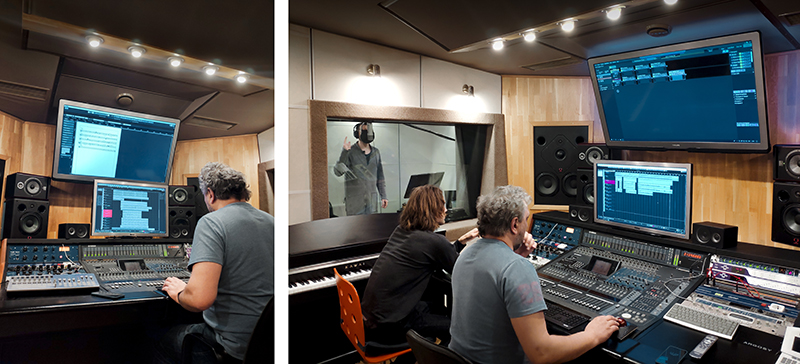
It depends on the musical. During Monte Cristo and Count Orlov, for example, pre-recorded instrumental parts are played from a backing track, and only the actors sing live. Due to this, the entire musical sequence for these two musicals was prepared in the studio. In the theater, a multitrack version with groups of instruments is used in order to adjust the instrument balance for different performers. As for the musical Anna Karenina, it is completely different: a symphony orchestra performs live, and the musicians who are in the orchestra pit are excluded from the multitrack being used. Creating musicals in the studio begins when the composer (all three musicals mentioned above were composed by Roman Ignatiev) comes up with the music and creates a demo version of each number. After that, the arrangers and orchestrators come into play. They provide several versions of each number, and then, as a sound engineer and sound producer, I combine the best of these versions, eliminating the unnecessary and adding the missing elements. Over time, while preparing several musicals, we have developed a working process and formed a team that includes arrangers Sergey Sysoev, Sergey Chekryzhov, and Alexey Kurbatov. Then, the demo version is sent for approval to the theater management. Once approved, writing of the scores for instrumental parts takes place. When the scores are ready, comes the most challenging phase: the recording process itself, when we search for a unique sound for each instrument. The recording process is quite lengthy – it can take up to six months. Editing and choosing the finest takes from the recorded materials are done concurrently with the recording. When the recording and editing processes are complete, mixing begins – meticulous work on placing each instrument part in the stereo field. Mastering is done almost during mixing to minimize changes in sound, as it may happen if a recording is mastered separately. As the studio work is being done, the artists at the theater are learning their vocal parts, first with the piano accompaniment, and then switching to the recorded instrumentals as they are ready. Almost all the work recorded in the studio is usually integrated into the musical as the result.
But it was slightly different with Monte Cristo, wasn't it? After all, it had been on stage for five years when you joined the team.
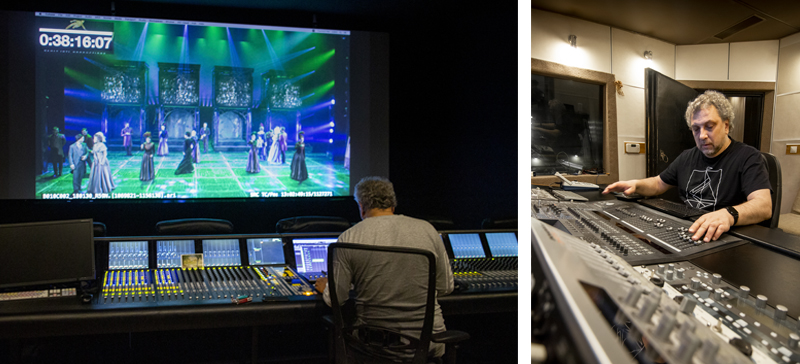
That's correct. While Count Orlov and Anna Karenina were entirely created by us from scratch, Monte Cristo was initially made and recorded at a different studio. In 2013, the theater management requested us to rework the instrumentals. The entire instrumental part was redone and remixed using the old tracks, however some compositions had to be “reassembled”: orchestra recordings were made for some of them, arrangements were re-created for others. So, the symphony orchestra recordings were added to the instrumental accompaniment and the rhythm section was completely reworked – thanks to these changes the musical got a new sound. This effort later had a significant role in the show's triumph at one of the largest international musical festivals, the Daegu International Musical Festival, in Daegu, South Korea in 2014. Monte Cristo won the Grand Prix as the best musical, prevailing against more than a dozen contenders from Europe and Asia, and making it the top musical in the world at the time.
What is the difference between the sound, the musical style of these musicals? What was special about your work in each case?
Before creating a new musical, we usually have a meeting with the composer, arrangers, the chief conductor, and theater management to mutually discuss the concept of the overall sound of the musical. Although all three musicals were written by the same composer, each of them has a unique sound and a music vibe for the audience to feel. Monte Cristo is more of a rock musical, and the genre determined the sound of the instrumental accompaniment to a great extent; we followed the canons of this musical genre. Count Orlov is a symbiosis of a rock musical and the sound of an orchestra and a large choir. Here we recorded a full-scale symphony orchestra, as well as the Bolshoi Theater choir, consisting of more than sixty people. In Anna Karenina, the pop rock sound was supplemented by standalone expansive symphonic numbers that corresponded to the sound of a classical symphony orchestra. Sometimes, to enhance the grandiose sound, low-frequency synthesizer parts were added, and large low percussion parts were introduced to some numbers. Another distinctive feature of Anna Karenina, as I mentioned, was the participation of live symphony orchestra musicians in the performance at the theater.
While preparing the musicals, did you work at the studio only? Or did you have a chance to work at the performances as well?
Before the first night of the musical, I practically lived in the theater. To achieve the maximum sound quality, we had to completely re-arrange the L-Acoustics sound systems in the theater, and then I reconfigured the parameters of the sound systems. In Anna Karenina, to amplify the symphony orchestra, I personally had to select individual DPA microphones for each of the musicians. A new orchestra sound was tuned, and that tuning significantly differed from the standard sound for performances in the repertoire of the theatre. To convey the intended sound concept, we adjusted and sought the balance and proper combination of the sound of the orchestra, vocalists, and multitrack recorded in the studio. During the sound setup for the musicals, I realized that the existing theater mixing consoles were insufficient to fully demonstrate our sound concept to the audience. Therefore, together with the theater management, we decided to purchase a new Yamaha Rivage PM10 console (144 channels) and a new Bricasti effects processor. In the end, we achieved the highest possible sound quality for this hall – that’s exactly what I had in mind.
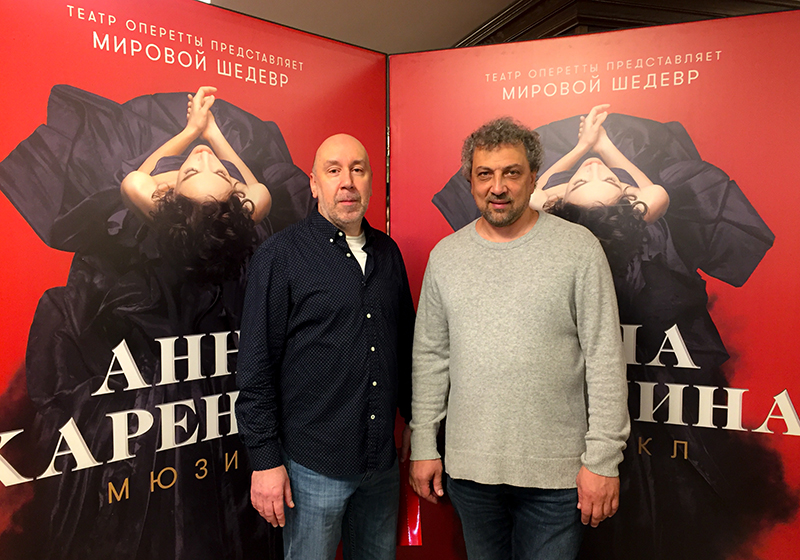
How was the sound created for the film version of Anna Karenina?
It all started with the shooting – it was carried out by an international team within three shooting days, both with and without the audience. To record in the theater, in addition to the sound received from the vocalists' and musicians' microphones, I used my SoundField MKV studio microphone. Later, the tracks recorded with the help of this microphone were used in creating the film version in 5.1 format (the sound for the film version was released in two formats: stereo and 5.1). Almost a hundred audio tracks were recorded. After the shooting, parallel to the film editing, the recorded audio tracks were edited in the studio. As soon as the first edited version of the film was available, I started mixing the material. The material was assembled not just as a theatrical production but specifically as a film version. A lot of time was spent on selecting and synchronizing the necessary takes, since the close-ups of the artists were taken from different shooting days. The stereo version of the film was fully prepared and mixed at my Studio CSP. For the version of 5.1 sound format, we had to rent a studio. Sergey Bolshakov and Fly Sound studio were there to help us with that. There I managed to recreate the ambiance of the Operetta Theater hall to maximum extent as well as worked on the spatial sound. In the end, the film version of the musical was successfully shown in the US, Mexico, Canada, Ireland, the United Kingdom, China, Japan, many other countries, and, of course, in Russia.
Anna Karenina is not only a musical in the theater and a film version, but also a mobile app. Tell us more about it.
Before Anna Karenina, musicals were released on CDs, and the main parts were performed by one of the engaged casts, so fans of musicals could not listen to other performers. Instead of a CD version, I suggested releasing Anna Karenina as a mobile application that could be easily downloaded, so that the musical could be listened to at any convenient time (and it becomes harder to listen to the CDs each day). Such application would also allow the user to choose the performers that they would like to list to: any of the three actresses playing Anna Karenina’s part, the Vronsky or Kitty they prefer, and other participants. I wrote up technical requirements for the developers, specifying what and how should work, and they created the app. However, in the end, I had to do tens of times more work on recording vocals, editing, and mixing: for each option the user could choose, a separate mix and mastering were done. The application turned out to be unique – as far as I know, there aren't any equivalents presently.
What other projects are you working on now? And which ones would you like to work on in the future?
I am currently working with Karina Koks, Irakli, Katya Chistova, a young rock band called Psy Load, and also participating in the creation of a documentary film by Valdis Pelsh and Elena Potanina's studio. For myself, I’ve recently remixed and mastered three multitracks of the legendary Earth Wind & Fire band – I have always been interested in adding my sound to their brilliant music. In the future, I would like to work with music for large-scale feature films, with foreign directors and composers involved. Among music bands and performers, I dream of working on shows with British bands Bring Me The Horizon and Architects, as well as with the American singer and songwriter Israel Houghton and his amazing team, and, probably, with a Canadian artist Gino Vannelli.
Originally published in SHOWMASTER, Issue 1 (107), 2022. Interview by Nikita Kharchevnikov. English translation of the original Russian-language interview.